About Hydraulic portable Ramp
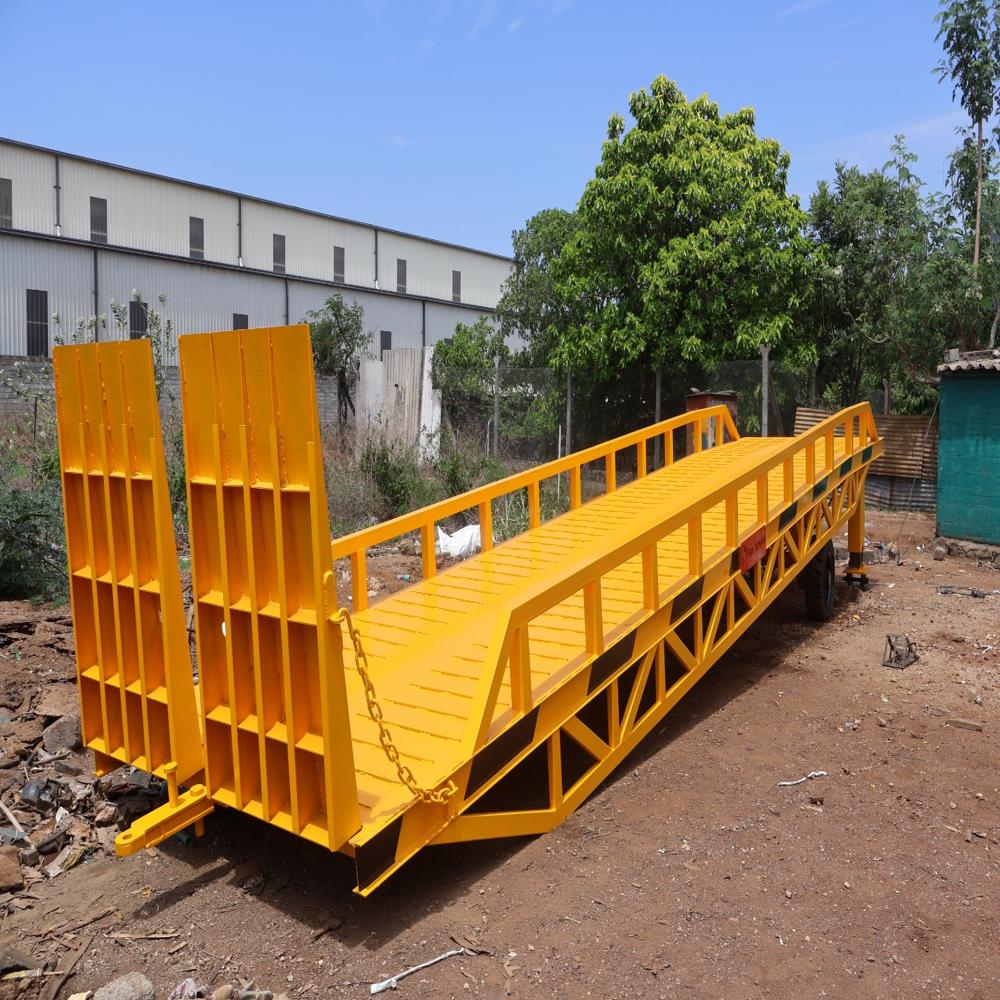
A hydraulic portable ramp is a movable loading and access system designed to bridge the height difference between a dock, platform, or ground level and a vehicle or raised surface. It uses a hydraulic mechanism to raise and lower the ramp smoothly and safely, allowing efficient loading and unloading of goods using forklifts, pallet trucks, or manual handling.
These ramps are widely used in warehouses, logistics centers, factories, and distribution hubs where fixed dock infrastructure is not available or flexible access is required.
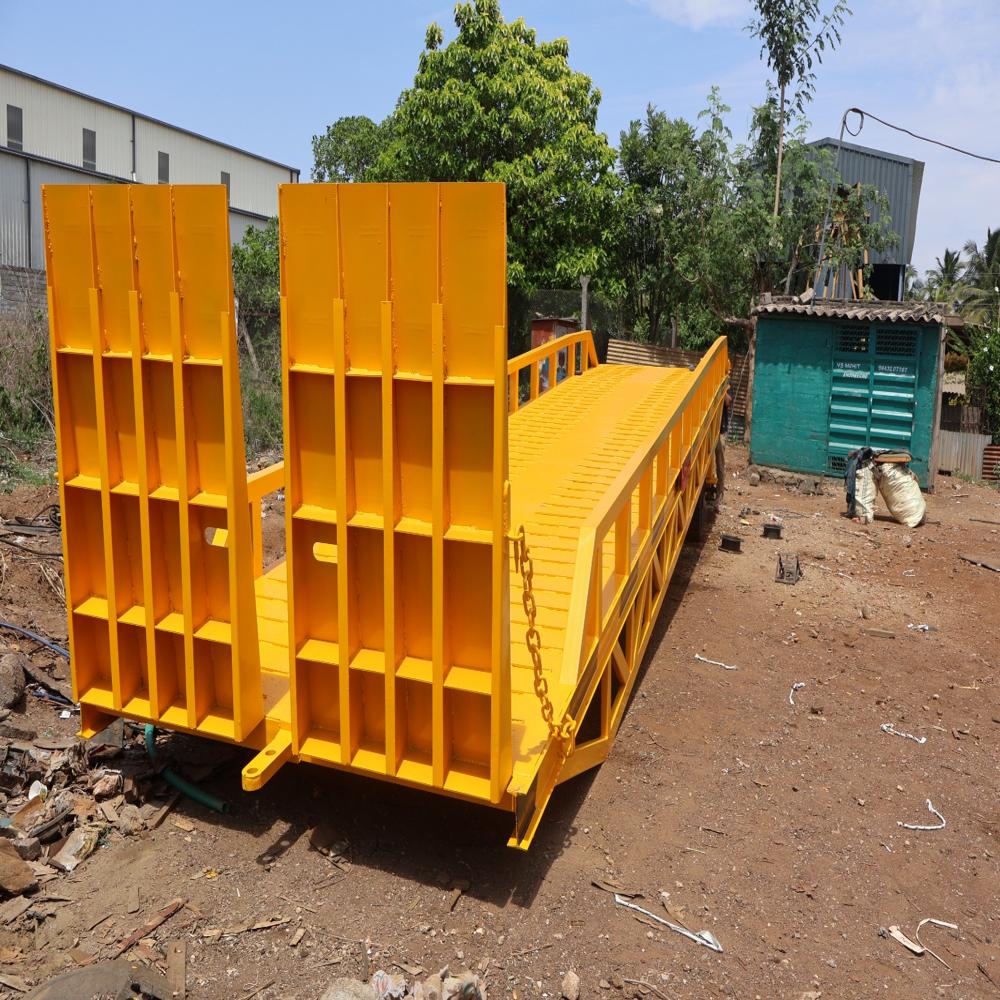
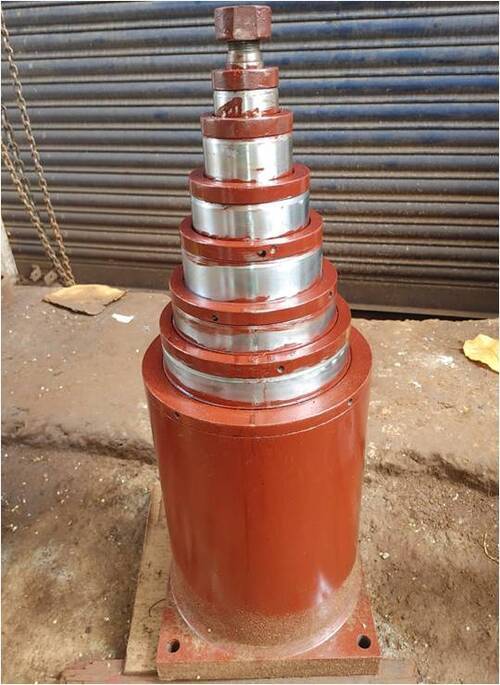
Key features typically include a strong steel frame, a non-slip surface for safety, and a hydraulic pump system (manual or electric) that controls lifting and lowering. Many models are designed to be portable or towable, making them easy to reposition within a facility or yard as needed.
Hydraulic portable ramps are valued for improving operational efficiency, reducing manual lifting risks, and enabling safer and faster cargo movement across different height levels.
Customizable Heavy-Duty PerformanceEngineered for reliability, this hydraulic portable ramp offers a load capacity between 8 and 15 tons, along with variable lengths, widths, and selectable power sources. The modular frame and choice of materials deliver exceptional strength, while the anti-skid platform surface and customizable dimensions make it suitable for a variety of industrial environments and loading requirements.
Advanced Safety and Easy MobilityEquipped with safety guardrails, side barriers, mechanical lock supports, and an emergency lowering valve, this ramp ensures secure operation even under heavy loads. Its portable design, combined with solid rubber or epoxy coated wheels, allows for easy movement and repositioning across locations, enhancing operational flexibility in dynamic workspaces.
Efficient Operation and Simple ControlsThe ramp utilizes a hydraulic system with adjustable speed controls, operating between 3-6 meters per minute, and supports both electric and manual pump options. The system's efficiency (85%) and industrial-grade finishes ensure consistent, low-maintenance performance, ideal for demanding loading dock tasks or warehouse management.
FAQ's of Hydraulic portable Ramp:
Q: How does the hydraulic portable ramp ensure safe loading and unloading?
A: The ramp is designed with anti-skid chequered plate surfaces, safety guardrails, side barriers, mechanical lock supports, and an emergency lowering valve. These features collectively prevent slippage, secure the ramp during operation, and provide emergency lowering in case of power failure, prioritizing operator and equipment safety.
Q: What customization options are available for the portable ramp?
A: Load capacity (8-15 tons), ramp length (8-12 meters), width (2-2.4 meters), color, and wheel type can all be customized. This allows the ramp to be tailored to specific site conditions or operational requirements, maximizing usability across a range of industries and applications.
Q: When should I opt for a hydraulic portable ramp in my operations?
A: A hydraulic portable ramp is ideal when you need flexible, temporary loading solutions-such as for trucks without level docks, variable loading heights, or shared spaces. It's especially useful for sites requiring rapid deployment, high load capacity, and enhanced safety in warehouse or dock operations.
Q: Where can the hydraulic portable ramp be used most effectively?
A: This ramp is most commonly used in warehouses, logistics centers, truck loading bays, and dock management areas. Its portable nature allows it to be repositioned as required, making it valuable for businesses with dynamic or multi-location material handling requirements.
Q: What is the typical process for operating the hydraulic portable ramp?
A: After positioning and securing the ramp (using the provided mechanical locks and safety chains), operators use the hydraulic controls to adjust the ramp height to match the truck or dock. Loading or unloading can then proceed safely, and the ramp can be moved or adjusted as workflow demands.
Q: What are the primary benefits of using this portable ramp?
A: The ramp delivers enhanced safety, time-efficient operations, flexibility due to its portability, reduced manual handling risks, and compatibility with various vehicles or dock setups. Its robust construction ensures long service life even under rigorous industrial conditions.









 Send Inquiry

 Send Inquiry
